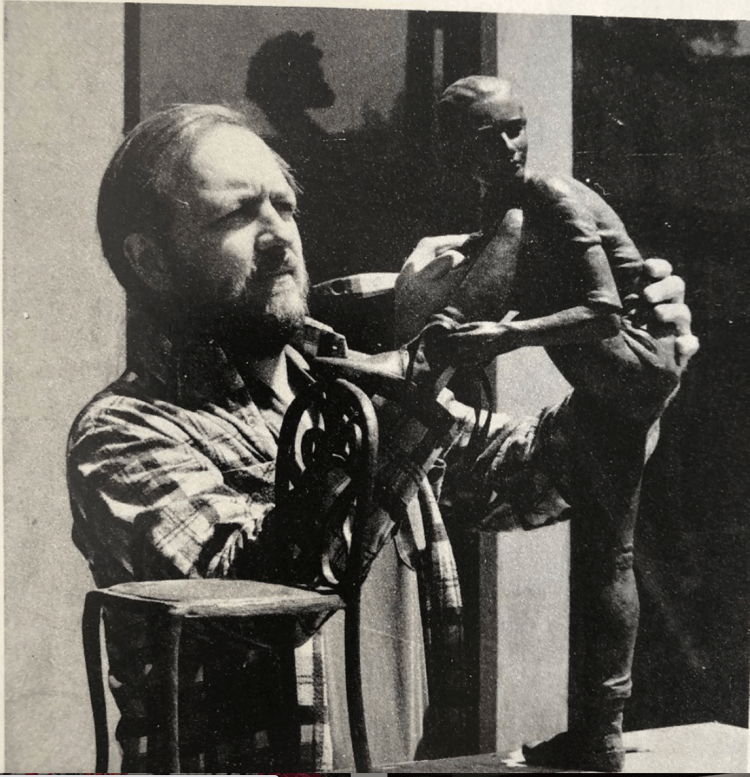
Víctor Manuel Villarreal
Artista mexicano, nacido en Nuevo Laredo, Tamaulipas. Realizó sus estudios profesionales en la Escuela Nacional de Artes Plásticas de la Academia de San Carlos de la Universidad Nacional Autónoma de México.
Siendo aún estudiante su calidad artística fue destacada y reconocida por el profesor y gran escultor Don Ignacio Asúnsulo, lo cual le mereció trabajar como su asistente en la enseñanza de la materia Teoría de la Composición.
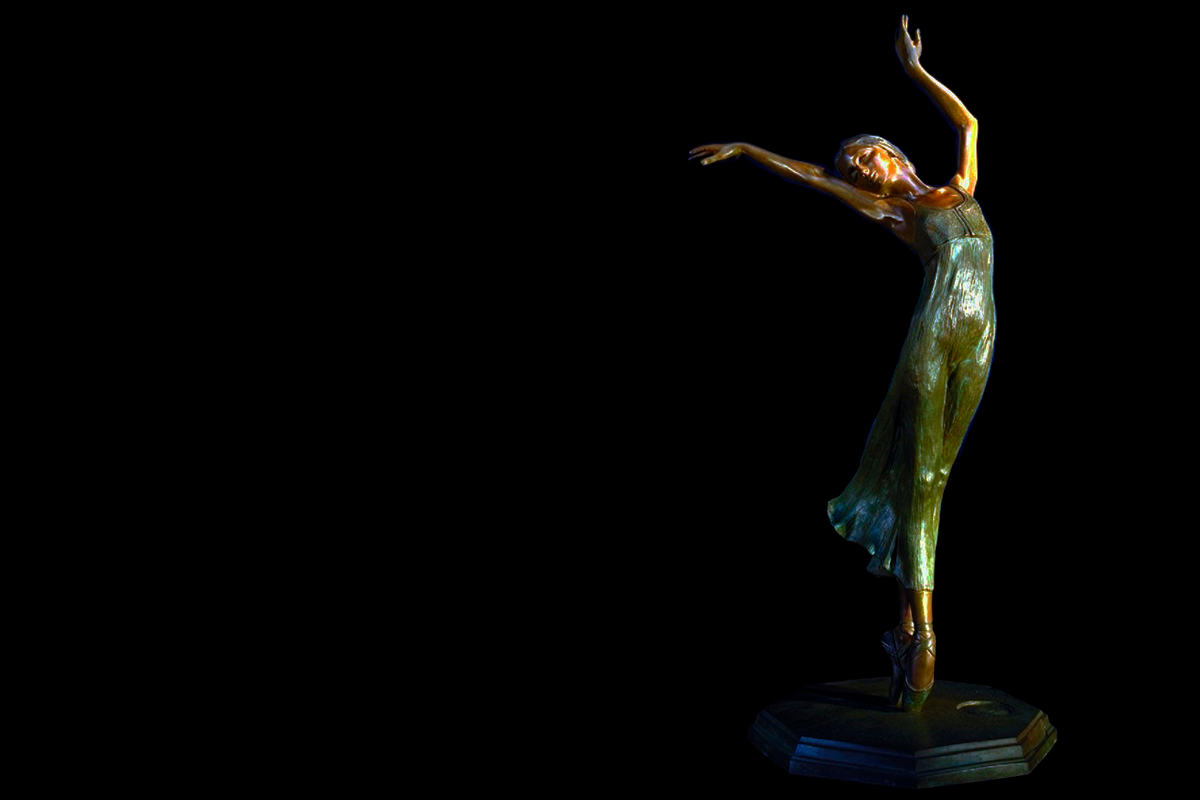
La producción artística de este escultor se desarrolló fundamentalmente en dos vertientes: como cronista estético de la historia y política nacional y, siguiendo su inclinación natural y fascinación por la figura humana, como escultor hiperrealista en torno a la máxima expresión del cuerpo humano: la danza. Creando a lo largo de 40 años de labor una excelsa colección de inigualables obras de arte que le han merecido ser internacionalmente reconocido como “El Escultor de las Bailarinas”.
“Un movimiento. El reto de plasmar una
composición con todas sus estrictas leyes. Una expresión.
La gracia capturada en una obra. En todas las etapas de la
historia del arte ha existido algún artista, algún artesano,
que ha sentido la necesidad de capturar ese bello mundo
que es el de la danza; el cuerpo humano en todo su
esplendor. Me gusta la figura humana, siempre ha sido
materia de aplicación, su descubrimiento, su estudio. Me
gusta la danza, por que es cuerpo humano desarrollado,
quinta esencia de la gracia; cada posición perfecta, cada
movimiento un propósito de expresión, y lo quiero decir en
bronce, el material ideal para mi necesidad de ser”.
Víctor M. Villarreal
Dentro de las esculturas de obra pública, principalmente monumentos esculpidos en bronce, destaca el del expresidente Gral. Lázaro Cárdenas, realizado para el complejo metalúrgico de “Las Truchas” en Michoacán, considerado como el mejor de este personaje por la fuerza de expresión y perfección anatómica. Asimismo, los monumentos de Don Francisco Sosa Escalante, Don Pablo García Montilla y Vicente Riva Palacio, realizados para ser colocados en la más famosa avenida de la Ciudad De México, El Paseo De La Reforma; el monumento titulado “El Sereno” levantado en la Glorieta de los Insurgentes; el monumento del expresidente Lic. Gustavo Díaz Ordaz para la residencia oficial de los presidentes de México; el del expresidente Lic. José López Portillo para la ciudad de Campeche; el busto del ilustre pensador mexicano Don Alfonso Reyes; el busto del expresidente Adolfo López Mateos para el salón que lleva su nombre en Los Pinos; las esculturas monumentales de Don Fidel Velázquez Sánchez para la C.T.M de la Ciudad de México y de la ciudad de Querétaro; los bustos de los insignes hombres de letras, Nemesio García Naranjo y Nemesio García Naranjo y Elizondo, padre e hijo; así como el busto del mexicano premio Nobel de literatura, Don Octavio Paz.
Adicionalmente, en el año 2010 realizó el monumento al exgobernador de Tabasco, Salvador Neme Castillo, para la Ciudad de Villahermosa; el monumento en Tamaulipas del malogrado candidato a gobernador Don Rodolfo Torre Cantú; y el monumento al Policía Caído en Servicio para el Estado de México, entre otros.
Víctor M. Villarreal es el artista creador de la monumental obra titulada “La Unidad”, manos entrelazadas que simbolizan la unión de Ciudad del Carmen con el continente, puesta precisamente sobre el puente que comunica a esta isla del sureste mexicano.
La majestuosa obra llamada “Yin Yang”, realizada por Víctor M. Villarreal para el Colegio de Contadores Públicos de México, fue la inspiración para que este emblema fuera posteriormente adoptado por todos los colegios de contadores del mundo.
En la etapa reciente del arte de Víctor M. Villarreal se retoma otro favorito: El paisaje mexicano, y se aventura, con impresionantes resultados, en una nueva técnica y dimensión, el lienzo y el carbón.
Las más renombradas galerías de arte, tanto en México como en el extranjero, manejan su obra, la cual ha sido expuesta en lugares como Nueva York, Pittsburg, Miami, Los Ángeles, Houston, Chicago, Dallas, Las Vegas, Tokio, Hawái, Costa Rica, Colombia, Brasil, Alemania, España, Francia e Italia. Asimismo, este gran artista ha expuesto en los
eventos, sedes y ferias internacionales de arte más importantes, incluyendo en el Palacio de Iturbide, el Museo Tlatilco, el Museo de la Ciudad de México, la Exhibición Anual del Banco Nacional de México, el Fomento de Cultura “Villa Magna”, las Art Expo de Nueva York, Dallas, Chicago, Houston y Los Ángeles, entre otras.
Actualmente, innumerables coleccionistas y conocedores de arte buscan y atesoran las atemporales esculturas y cuadros de Víctor M. Villarreal en los cuales vivirá por siempre el bellísimo estilo de este gran artista.
“La escultura; Un instante capturado…
Un momento de inspiración, ¡es solo una ilusión!, como
“un dibujo en el aire” hecho materia por la nobleza y
permanencia del bronce”.
Víctor M. Villarreal
Mexican artist born in Nuevo Laredo, Tamaulipas, Mexico. Víctor M. Villarreal studied in the National School of Plastic Arts of the San Carlos Academy (Escuela Nacional de Artes Plásticas de la Academia de San Carlos) of the Universidad Nacional Autónoma de México (UNAM).
His artistic quality outstood while still being a student and was recognized by his professor the great sculptor Mr. Ignacio Asúnsulo, who made Víctor M. Villarreal his assistant teacher of the assignment Composition Theory (Teoría de la Composición).
The artistic production of this sculptor was mainly developed into two trends: as an aesthetic chronicler of the Mexican national history and politics and, as a result of the artist’s natural inclination and fascination for the human body, as a hyper-realistic sculptor of the maximum body expression: dance. During a period of 40 years, the artist created a sublime collection of incomparable works of art that made him to be internationally known
as “The Dancers Sculptor”.
“One movement. The challenge of capturing a
composition with all of its strict laws. An expression. Grace
expressed in a work of art. In all history periods there has
been an artist, an artisan, that felt the need to capture the
beautiful world of dance; the human body in its highest
splendor. I like the human figure; it has always been a
subject of application, its discovery and its study. I like
dance because it is the human body elaborated, grace’s
fifth essence; each perfect position, each movement with
an expression purpose, and I want to express this in
bronze, the ideal material for my necessity of being.”
Víctor M. Villarreal
An outstanding example of a sculpture that the artist made as public work, mainly bronze monuments, is the monument of the Mexican ex president Mr. Lázaro Cárdenas, made for the “Las Truchas” metallurgical complex in Michoacán, Mexico, considered as one of the best monuments made of this character due to its expression strength and its
anatomic perfection. Likewise, the monuments of Messrs. Francisco Sosa Escalante, Pablo García Montilla and Vicente Riva Palacio, made to be placed in the most famous avenue in Mexico City, El Paseo de La Reforma; the monument called “El Sereno” standing in the Glorieta de los Insurgentes in Mexico City; the monument of the Mexican
ex president Mr. Gustavo Díaz Ordaz made for the Mexican presidents’ official residency; the monument of the Mexican ex president Mr. José López Portillo made for the city of Campeche; the bust of the illustrious Mexican poet and thinker Mr. Alfonso Reyes; the bust of the Mexican ex president Mr. Adolfo López Mateos made for the salon named after
him in “Los Pinos” in Mexico City; the monumental sculptures of Mr. Fidel Velázquez Sánchez for the C.T.M. of Mexico City and of the city of Querétaro; the busts of the Mexican literary men Nemesio García Naranjo and Nemesio García Naranjo y Elizondo, father and son; as well as the bust of the Mexican Nobel laureate for Literature, Mr. Octavio Paz.
In addition to the aforementioned public works of art, in the year 2010 the artist made, among others, the monument of Mr. Salvador Neme Castillo, ex governor of the state of Tabasco, Mexico, placed in the city of Villahermosa; the monument of the lat candidate for governor, Mr. Rodolfo Torre Cantú, in Tamaulipas, Mexico; and the monument of the Fallen Police Officers (Policía Caído en Servicio) for the Estado de México.
Víctor M. Villarreal is the creator of the spectacular monument titled “The Union” (“La Unión”), interlaced hands which symbolize the union between Ciudad del Carmen with continental land, placed precisely over the bridge that communicates this island in Mexico’s southeast.
The majestic work of art called “Yin Yang”, made by Víctor M. Villarreal for the Public Accountants College of Mexico (Colegio de Contadores Públicos de México), was the inspiration for all the accountants’ colleges around the world to later adopt such emblem as theirs.
During the last recent years Víctor M. Villarreal’s art retakes another favorite: The Mexican landscape, and it ventures, with impressive results, into a new art technique and dimension, The Canvas and The Coal.
The most renowned art galleries, both in Mexico and abroad, manage his works of art which have been exhibited in cities and countries such as New York, Pittsburg, Miami, Los Angeles, Houston, Chicago, Dallas, Las Vegas, Tokyo, Hawaii, Costa Rica, Colombia, Brazil, Germany, Spain, France and Italy. Likewise, this great artist has exposed its work
in the most important international art fairs and events, such as in the Palacio de Iturbide in Mexico City, the Museo Tlatilco in Mexico City, the Museo de la Ciudad de México, the Annual Art Exhibition of Banco Nacional de México, the Fomento de Cultura “Villa Magna”, and the Art Expos of New York, Dallas, Chicago, Houston and Los Angeles, among
others.
Nowadays, innumerable art collectors and connoisseurs search and treasure the timeless sculptures and paintings of Víctor M. Villarreal, in which this great artist’s beautiful vision and style will live forever.
“Sculpture; A captured instant… A moment of
inspiration, it is just an illusion! Like “a drawing in the air”
transformed into matter by the nobility and continuity of
bronze.”
Víctor M. Villarreal
 VICTOR M. VILLARREAL